Verify the individual car
This page describes a model, engine or historical subject at archive level. Before using a specification for purchase, valuation or repair, confirm the chassis identity, production date, market version and installed parts of the individual car. Previous repairs and conversions can change what is present. Use the linked factory material for exact procedures and record measurements and observations rather than relying on appearance alone.
Road cars served the rulebook
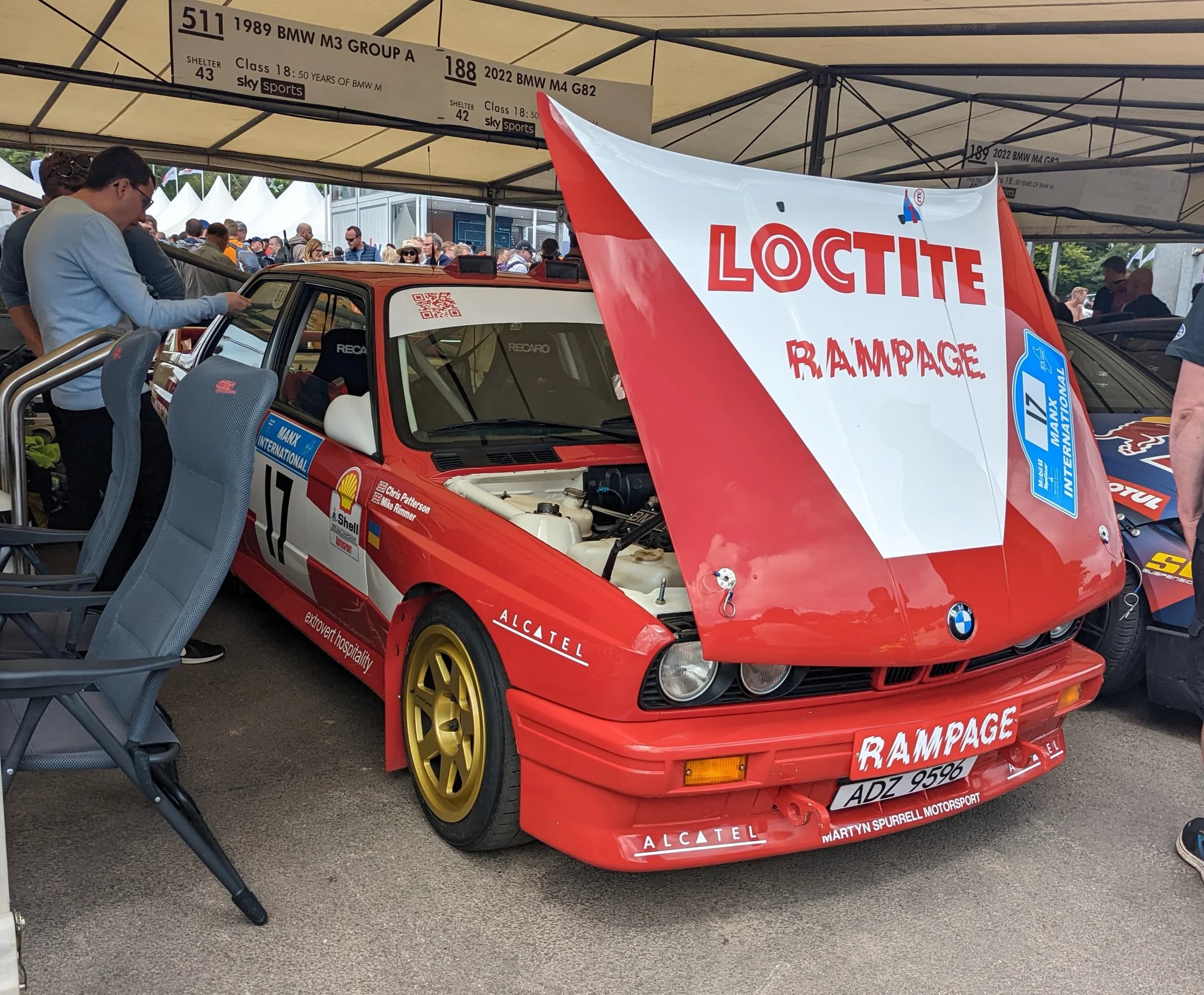
Group A required competition cars to relate closely to a minimum number of production cars. BMW therefore engineered useful racing features into the road M3: altered body panels, aerodynamics, five-lug hubs and the S14. Evolution models homologated further changes as rivals and tyre technology advanced.
A platform that could evolve
The four-cylinder layout helped weight distribution and allowed the engine to grow from 2.3 to 2.5 litres. Teams developed suspension, brakes, engine management and aero within the rules. Success did not come from one fixed specification; it came from a road-car architecture that accepted sustained competition development.
Why homologation matters today
Road-car details are not arbitrary styling: many trace directly to competition needs. That context helps distinguish genuine parts and explains why converting a standard E30 into an M3 lookalike cannot reproduce the full package. The M3’s value rests on engineering provenance as much as race results.