Verify the individual car
This page describes a model, engine or historical subject at archive level. Before using a specification for purchase, valuation or repair, confirm the chassis identity, production date, market version and installed parts of the individual car. Previous repairs and conversions can change what is present. Use the linked factory material for exact procedures and record measurements and observations rather than relying on appearance alone.
Triage before cosmetics
Inspect tyres, brake hoses, hard lines, fuel hoses, steering joints and structural mounting points before spending on appearance. Photograph findings and divide them into unsafe, reliability-critical and monitor-only. This prevents a long wish list from hiding the jobs that determine whether the car should be driven.
Reset time-sensitive service
Replace unknown timing belts on M20, M21 and M40 engines with the correct tensioning parts; consider the water pump where access overlaps. Renew engine oil, coolant and brake fluid with the right specification, then record the baseline. Chain-driven engines still need inspection—chain drive does not make old oil, hoses or cooling parts immortal.
Treat cooling as a system
Radiator, cap, thermostat, pump, fan coupling, heater valve and every hose work together. Pressure-test cold, inspect for staining and verify stable road temperature plus correct heater output. Replacing one visible leak while ignoring pressure control or a weak fan often creates a repeat failure.
Sources and reference material
Use the factory information for the exact model, build date and equipment before safety-critical work.
- BMW E30 M3 / 320is factory repair manual Period factory procedures and component drawings; M3/320is-specific where stated.
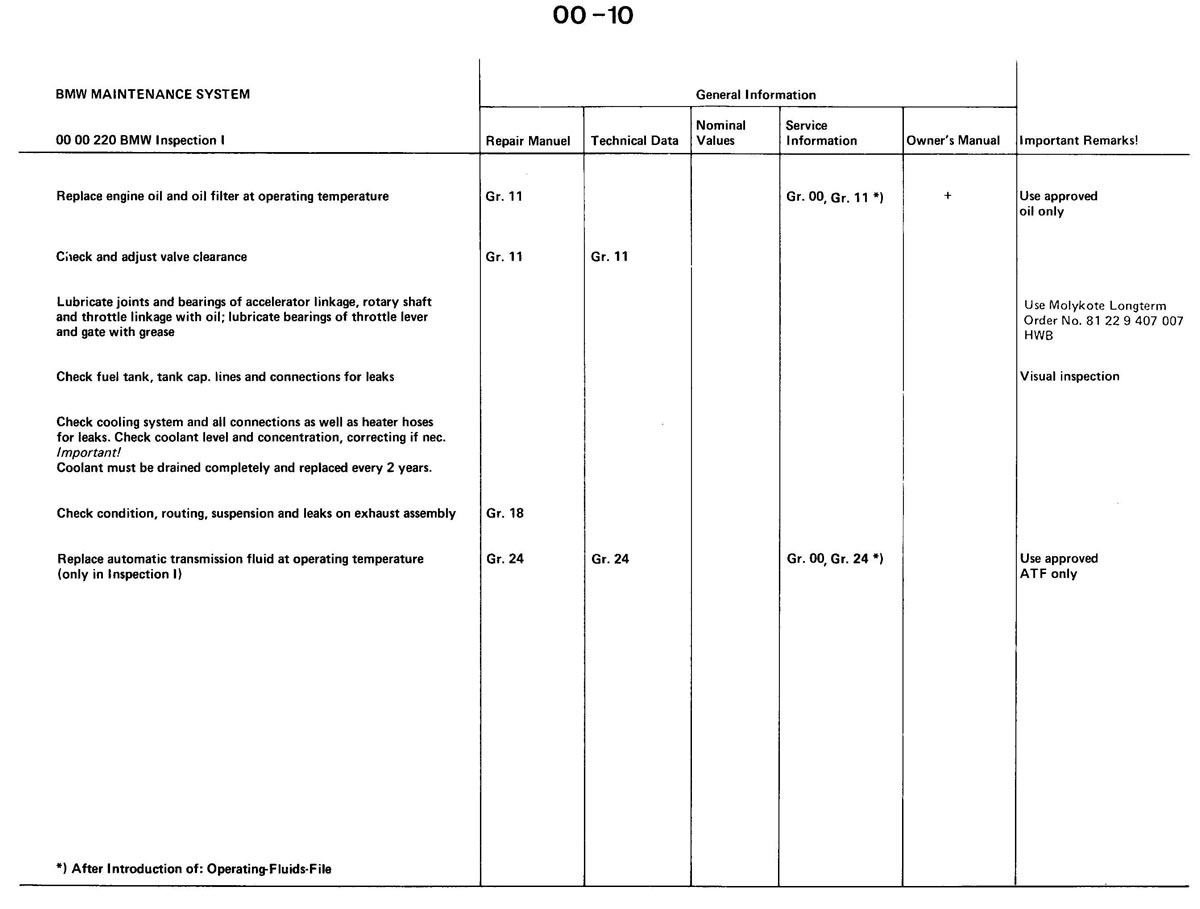
- BMW repair group 00 · maintenance The displayed factory page is the opening Inspection I checklist; continue through the chapter for the remaining checks.