Verify the individual car
This page describes a model, engine or historical subject at archive level. Before using a specification for purchase, valuation or repair, confirm the chassis identity, production date, market version and installed parts of the individual car. Previous repairs and conversions can change what is present. Use the linked factory material for exact procedures and record measurements and observations rather than relying on appearance alone.
Start where loads enter the shell
Jacking points, sill reinforcements, front control-arm areas and rear subframe mounts deserve priority because corrosion changes structural strength, not just appearance. Look from several angles and compare left with right. Crushed seams, thick sealant and new coating around one isolated area can indicate earlier repair.
Follow water from top to bottom
Inspect the windscreen surround, scuttle drains, sunroof cassette and drain exits, door membranes, boot seal and tail-light gaskets. Wet carpets are not merely inconvenient: they keep floor seams damp and can damage electrical connections. Find the entry point rather than drilling another drain hole.
Judge the repair, not just the rust
Good metalwork removes affected material, recreates structure, protects cavities and leaves drainage functional. A flat patch over corrosion may pass a quick glance but traps the original problem. Ask for repair photographs before paint; they reveal far more than a smooth finished sill.
Sources and reference material
Use the factory information for the exact model, build date and equipment before safety-critical work.
- BMW E30 M3 / 320is factory repair manual Period factory procedures and component drawings; M3/320is-specific where stated.
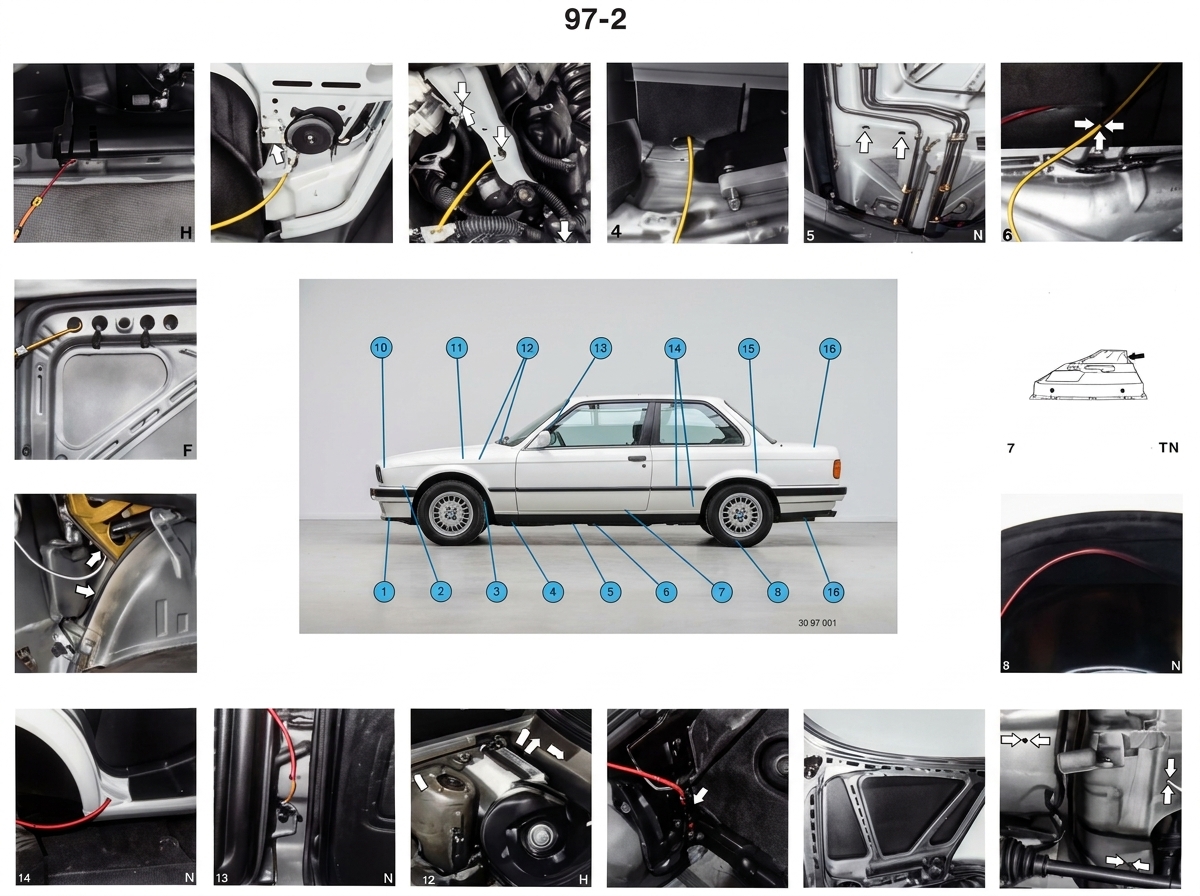
- BMW repair group 97 · body-cavity sealing and undercoating