Verify the individual car
This page describes a model, engine or historical subject at archive level. Before using a specification for purchase, valuation or repair, confirm the chassis identity, production date, market version and installed parts of the individual car. Previous repairs and conversions can change what is present. Use the linked factory material for exact procedures and record measurements and observations rather than relying on appearance alone.
Restore the baseline first
Control-arm bushes, ball joints, top mounts, rear subframe bushes and trailing-arm bushes influence the car more than fashionable hardware. Replace failed parts with coherent quality components, then align the car. Mixing one very stiff bush into an otherwise tired system moves load rather than solving it.
Ride height changes geometry
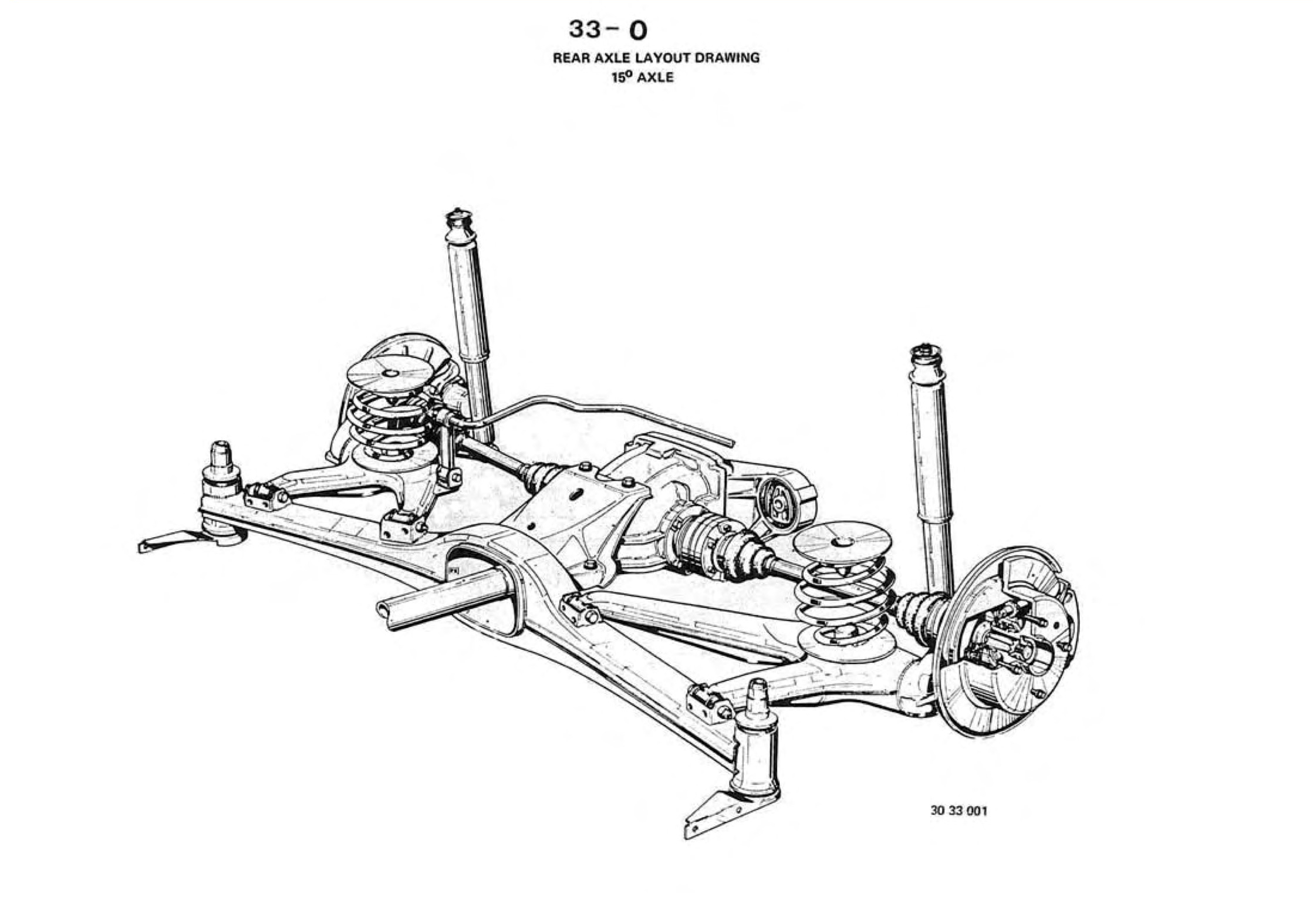
At the rear, lowering adds negative camber and changes toe through the semi-trailing-arm path. At the front, tie-rod and control-arm angles affect bump response. Choose a usable ride height, confirm suspension travel and measure alignment with the normal fuel and driver load.
Diagnose steering play by source
Steering-column joints, rack mounts, inner and outer tie rods, wheel bearings and front ball joints can all produce vague response. Have an assistant move the wheel gently while each joint is observed under load. Replacing the rack before identifying the movement is expensive guesswork.
Sources and reference material
Use the factory information for the exact model, build date and equipment before safety-critical work.
- BMW E30 M3 / 320is factory repair manual Period factory procedures and component drawings; M3/320is-specific where stated.
- BMW repair group 31 · front axle
- BMW repair group 33 · rear axle
- RealOEM · E30 rear axle support and wheel suspension