Verify the individual car
This page describes a model, engine or historical subject at archive level. Before using a specification for purchase, valuation or repair, confirm the chassis identity, production date, market version and installed parts of the individual car. Previous repairs and conversions can change what is present. Use the linked factory material for exact procedures and record measurements and observations rather than relying on appearance alone.
Begin with hydraulics
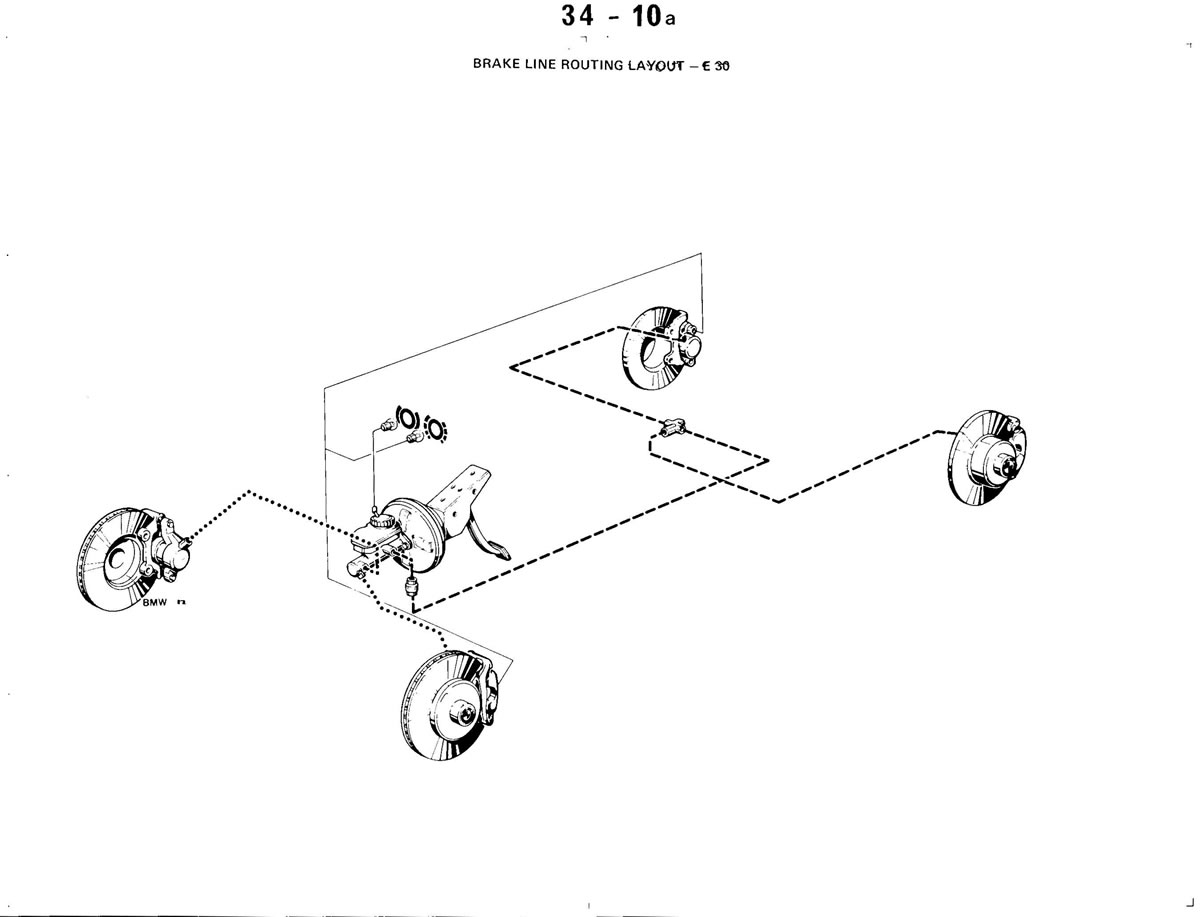
Inspect rigid lines, flexible hoses, caliper seals, rear cylinders where fitted, master cylinder and servo vacuum supply. Old fluid absorbs moisture and lowers boiling resistance. A sinking pedal, uneven pull or repeated fluid loss requires diagnosis before the car returns to the road.
Match pads, discs and use
Road pads need cold bite, low noise and predictable modulation; track compounds trade some of that for temperature capacity. Disc diameter alone does not guarantee balance. Tyres, rear-brake condition, master-cylinder sizing and cooling all influence stopping performance.
Verify after every repair
Bleed correctly, check for leaks under sustained pedal pressure and confirm free wheel rotation. Bed pads according to their manufacturer on a safe route, then recheck fasteners and fluid level. A brake job is complete only when behaviour is repeatable, not when the parts are installed.
Sources and reference material
Use the factory information for the exact model, build date and equipment before safety-critical work.
- BMW E30 M3 / 320is factory repair manual Period factory procedures and component drawings; M3/320is-specific where stated.
- BMW repair group 34 · brakes