Verify the individual car
This page describes a model, engine or historical subject at archive level. Before using a specification for purchase, valuation or repair, confirm the chassis identity, production date, market version and installed parts of the individual car. Previous repairs and conversions can change what is present. Use the linked factory material for exact procedures and record measurements and observations rather than relying on appearance alone.
Character and place in the range
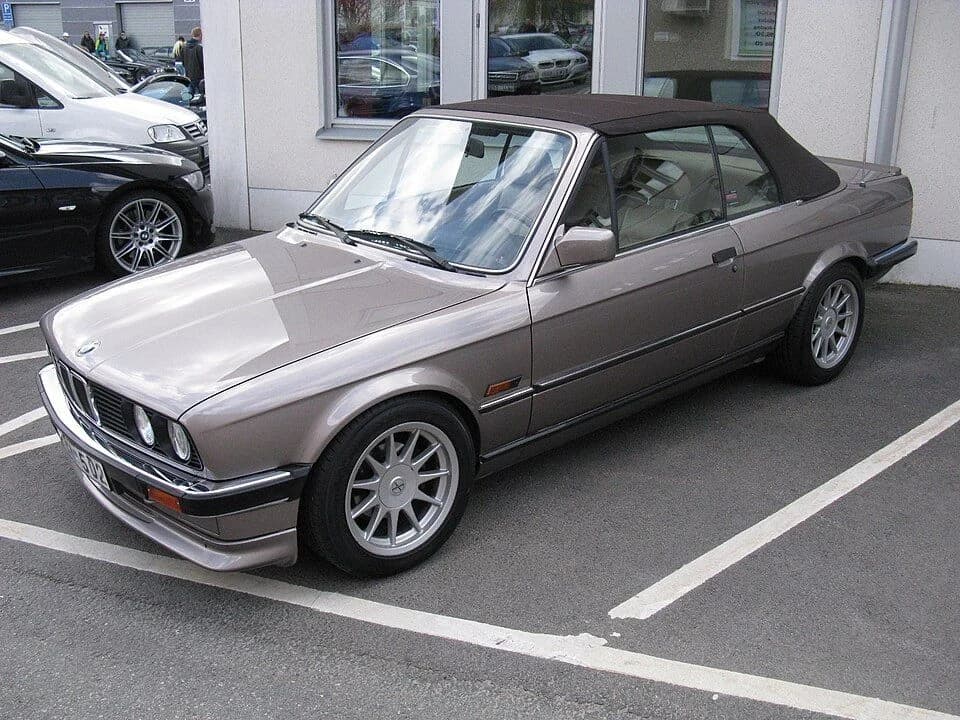
BMW's first fully in-house designed convertible.
The Cabrio was heavier than the coupé due to 100+ kg of chassis reinforcements. This made it slightly slower, but the 325i Cabrio was still good for 215 km/h.
Engine range
318i: Regularly sold, especially popular in North America as entry-level.
320i: 129hp buttery smooth 6-cylinder. The perfect cruiser.
325i: The most sought-after M20 variant for the cabrio, beautiful sound top down.
Inspection and maintenance
Attention is crucial for the top (tears, mechanism) and drainage. Rust in the top compartment and reinforced sills is a known E30 cabrio issue.
Condition varies more than specification. Inspect structure first, verify the engine’s time-sensitive service and road-test the complete car before valuing trim or options.
Details worth knowing
BMW continued producing the E30 Convertible until 1993 (alongside the new E36 sedan) because the E36 Convertible wasn't ready until 1993.
The E30 convertible doesn't need a roll bar; this was compensated for by heavy steel reinforcements inside the sills.